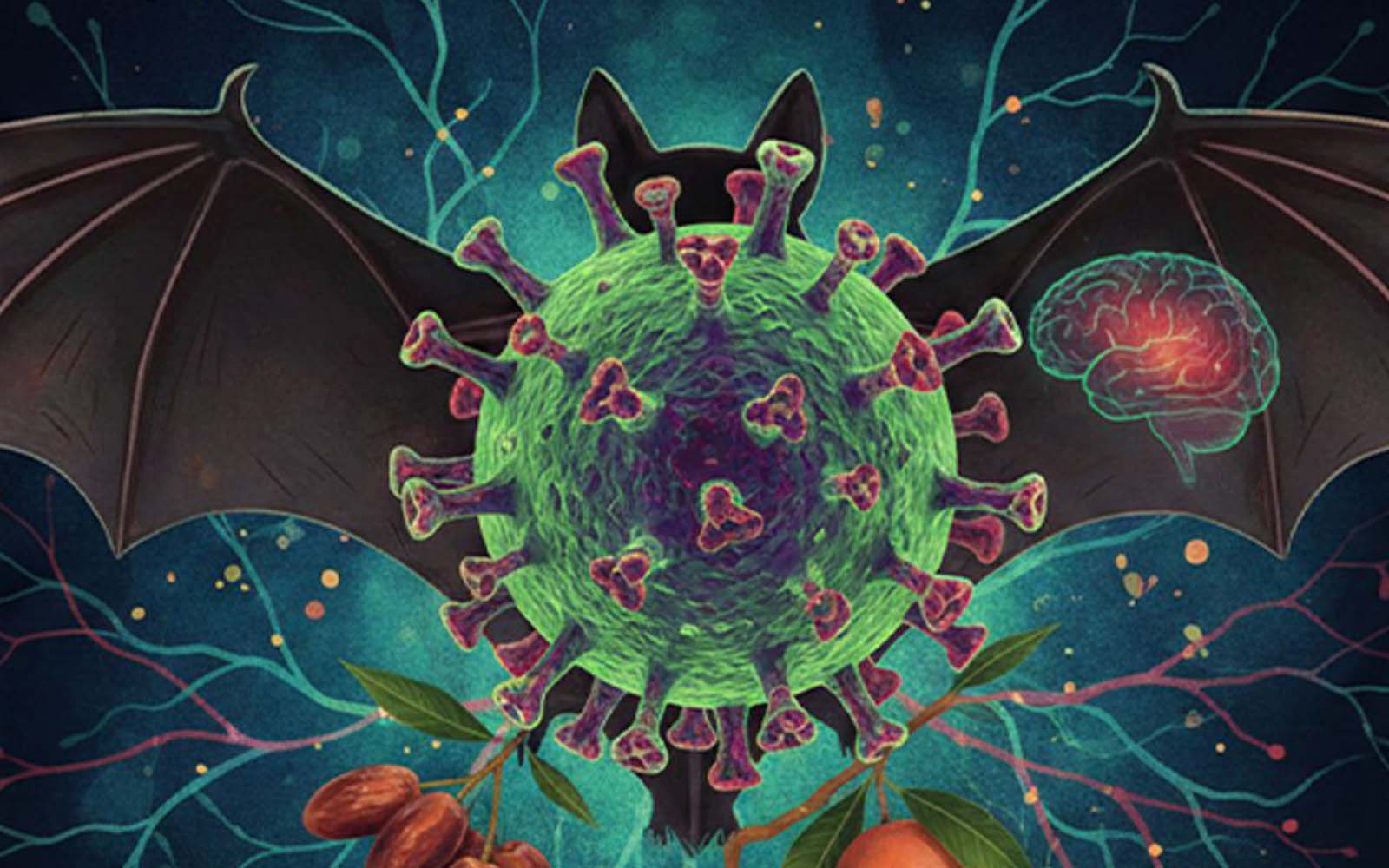
Recently, new infections have been detected in India and Bangladesh, leading the World Health Organization (WHO) to classify it as a virus with epidemic potential that requires close monitoring. This is the Nipah Virus, abbreviated as NiV. Since it is an environment under WHO surveillance, this article details its history, transmission, symptoms, and prevention methods.
History
1. Initial Discovery
NiV is not a newly discovered virus. It was first identified in 1998–99 in Malaysia and Singapore. It was named after a village in Malaysia called Kampung Sungai Nipah, where it was first found. At that time, it was discovered in pig farming operations, marking the largest outbreak of NiV in history. Over one million pigs had to be culled, and there were 265 human cases with over 100 deaths. That was the only instance in history involving transmission through pigs. Since then, NiV has not been detected in Malaysia or Singapore.
2. Recurring Outbreaks in Bangladesh
In Bangladesh, NiV outbreaks have occurred almost every year since 2001. The primary cause here is fruit bats. However, it is rarely a direct transmission from bats; rather, it occurs when people drink raw date palm sap or coconut juice that has been contaminated by the bats. January and February are particularly risky as they are both the breeding season for bats and the peak season for date palm sap collection.
3. The 2014 Philippines Outbreak
This incident differed from others. It occurred in two villages in the Philippines, and the primary cause was the consumption of infected horse meat. The mortality rate reached 82%, and besides humans, cats and dogs that consumed the meat also died.
4. Outbreaks in India
India has a history of NiV outbreaks in 2001 and 2007, and it is currently re-emerging in West Bengal in 2026. In 2018, the outbreak in Kerala became well-known due to a nurse who died after treating the first patient. The main causes in India are contact with fruit bats and human-to-human transmission.
Looking at this history, it is clear that the Nipah Virus (NiV) does not disappear entirely but rather remains hidden and re-emerges periodically.
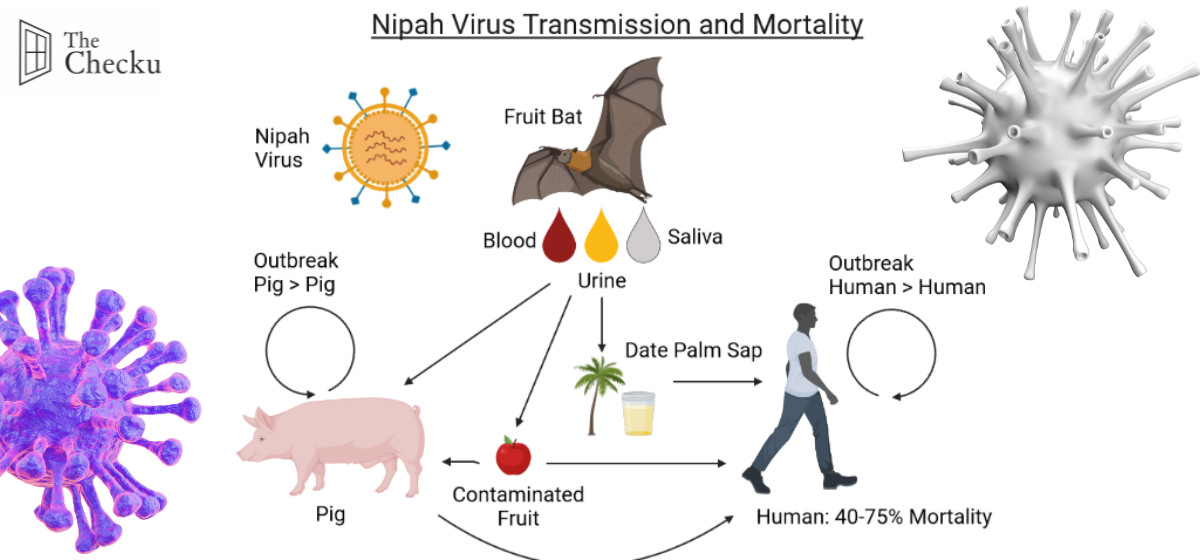
Photo Credit: The Checkup
How NiV Spreads
Based on its history and current transmission patterns, NiV is a Zoonotic Virus (a virus transmitted from animals to humans). Fruit bats are the natural hosts. Transmission can occur in three ways:
- Food - Consumption of food contaminated with the saliva or urine of infected bats. As mentioned, drinking raw date palm/coconut sap or eating fruits bitten by bats can lead to infection.
- Direct Animal Contact - Direct contact with infected animals, like bats or pigs, or consuming their meat.
- Human-to-Human Transmission - Direct contact with the blood, saliva, or urine (body fluids) of an infected person.
Note: NiV is NOT airborne.
Symptoms
Symptoms typically appear between 4 and 14 days after infection. Initially, they resemble a common flu:
- Fever and headache
- Cough and sore throat
- Difficulty breathing
As the disease progresses, signs of encephalitis (brain inflammation) may appear, such as confusion, drowsiness, or seizures. Within 24 to 48 hours, a patient may fall into a coma. The average fatality rate of NiV is between 40% and 75%, making it a life-threatening pathogen. Therefore, prevention is critical.
Prevention
Once you understand the causes, prevention is straightforward. Important steps to follow include:
- Avoid Raw Sap: Do not drink raw date palm or coconut sap.
- Inspect Fruit: Do not eat fruits that show signs of bird or bat bites. Wash all fruits thoroughly.
- Monitor Animals: Watch for unusual clusters of illnesses in local animals and avoid contact with sick livestock.
- Cook Thoroughly: Ensure food is properly cooked and wash your hands thoroughly before eating.
- Stay Informed: Monitor health news and consult a doctor at the nearest hospital or clinic if you suspect any symptoms.
Note: There is currently no specific drug or vaccine to treat NiV.
We hope this gives you a comprehensive understanding of the Nipah Virus (NiV). While taking care of your own health, please share this awareness with your community. May everyone stay safe from the dangers of this disease.




Anonymous